AI Marketing Agency Chicago: Transform Your Digital Strategy with Smart Automation
Finding the right AI marketing agency Chicago businesses trust isn’t about flashy promises or complex jargon it’s about practical results. Chicago’s marketing landscape has shifted dramatically, and traditional approaches simply don’t cut through the noise anymore. Businesses across the Loop, River North, and beyond are discovering that artificial intelligence isn’t some distant future concept; it’s happening right now, reshaping how customers find, engage with, and ultimately choose brands. The challenge isn’t whether to adopt AI marketing it’s finding partners who actually understand both the technology and your business goals without drowning you in technical nonsense.

What makes Chicago’s AI marketing scene particularly interesting is the blend of old-school business sense with cutting-edge innovation. This city has always been pragmatic, and that mindset applies to how local agencies approach AI implementation. You’re not looking for smoke and mirrors. You want strategies that move metrics, campaigns that actually convert, and technologies that integrate smoothly without requiring a computer science degree to understand. The best AI marketing solutions feel almost invisible. They just work, quietly optimizing your campaigns while you focus on running your business.
Why Chicago Businesses Need AI Marketing
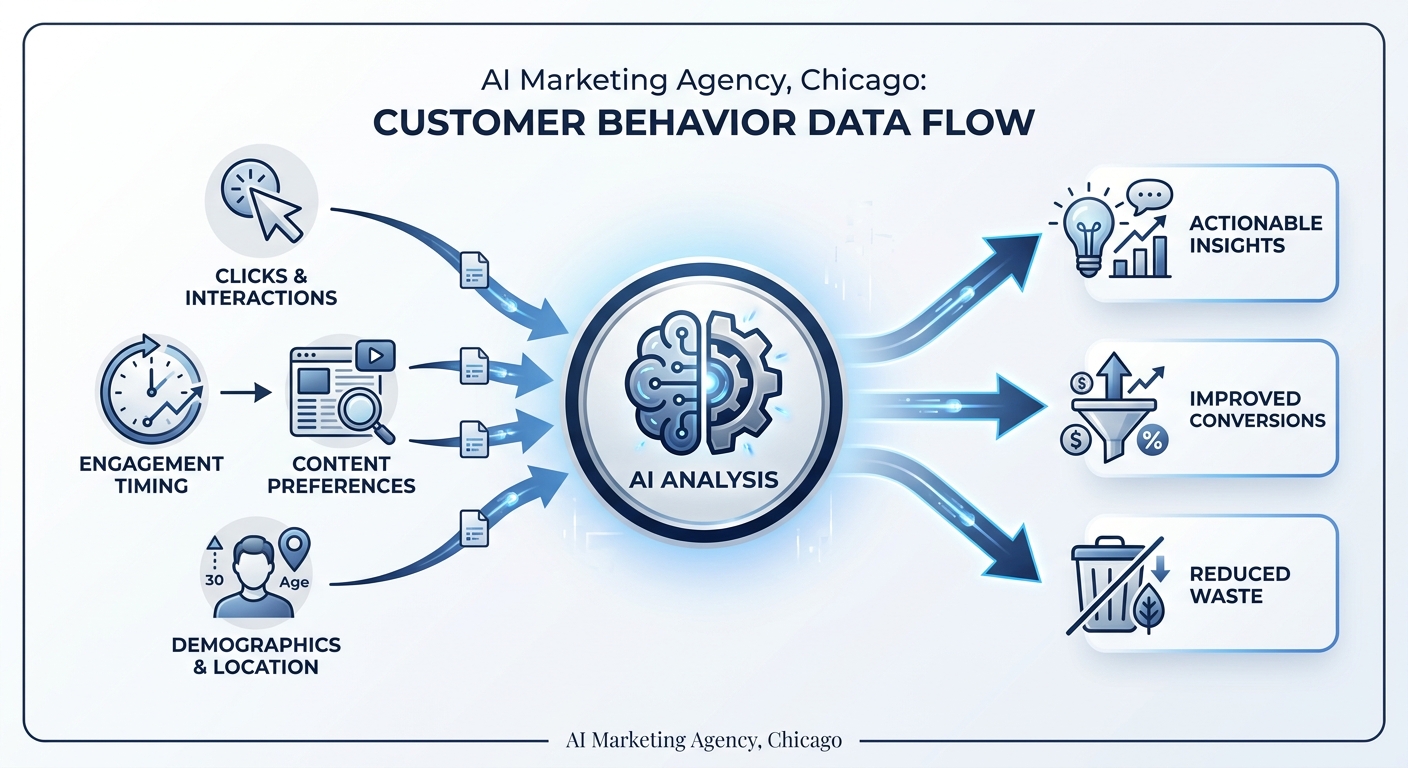
The Midwest business culture values results over hype, which is precisely why AI marketing fits so naturally here. Chicago companies are discovering that machine learning algorithms can analyze customer behavior patterns faster and more accurately than any human team ever could. When you’re competing in markets stretching from Streeterville to the West Loop, understanding what drives your audience becomes absolutely critical. AI tools process thousands of data points click patterns, engagement timing, content preferences, demographic shifts and turn that information into actionable insights.
Traditional marketing relies heavily on assumptions and general best practices. AI flips that model entirely. Instead of guessing when to send emails or which ad creative might perform better, machine learning systems test variables continuously, learning what actually works for your specific audience. A restaurant group in Wicker Park discovered their email open rates jumped 47% simply by letting AI determine optimal send times based on individual subscriber behavior. That’s not magic. It’s pattern recognition at scale.
Chicago’s competitive landscape makes efficiency non-negotiable. Whether you’re a B2B operation in the Financial District or a retail brand with locations across Lincoln Park, wasted marketing spend hurts. AI reduces that waste dramatically by predicting which prospects are most likely to convert, which channels deserve more budget, and which campaigns need adjustments before they underperform. The technology pays for itself quickly when implemented correctly.
Real-Time Adaptation Changes Everything
Markets shift constantly, and AI systems adjust accordingly. Unlike static campaigns that run unchanged for weeks, AI-driven marketing responds to performance data instantly. If certain messaging resonates better on rainy days or specific demographics engage more during lunch hours, the system learns and adapts without manual intervention. This responsiveness particularly benefits Chicago businesses dealing with seasonal fluctuations or rapidly changing consumer trends.
Core Services Smart Agencies Deliver
Not every AI marketing agency Chicago offers actually provides comprehensive solutions. Some focus narrowly on chatbots or basic automation, missing the bigger strategic picture. Truly effective agencies integrate multiple AI capabilities into cohesive strategies that address your specific challenges. Predictive analytics forms the foundation, understanding not just what happened, but what’s likely to happen next. This forecasting ability transforms budget allocation, inventory planning, and campaign timing from educated guesses into data-backed decisions.
Content creation has evolved remarkably with AI assistance. Modern systems don’t replace human creativity; they amplify it. AI tools generate initial drafts, suggest headlines based on performance data, optimize meta descriptions for search visibility, and even recommend content topics based on trending searches and competitor gaps. A legal firm in the Loop reduced content production time by 60% while actually improving engagement metrics by combining human expertise with AI efficiency.
Personalization reaches new levels with machine learning. Instead of basic name insertion or demographic segmentation, AI enables truly individual experiences. Website content adjusts dynamically based on visitor behavior, email sequences shift based on engagement patterns, and ad creative varies according to predicted preferences. This granular personalization drives conversion rates upward because customers encounter messaging that actually relates to their specific needs and interests.
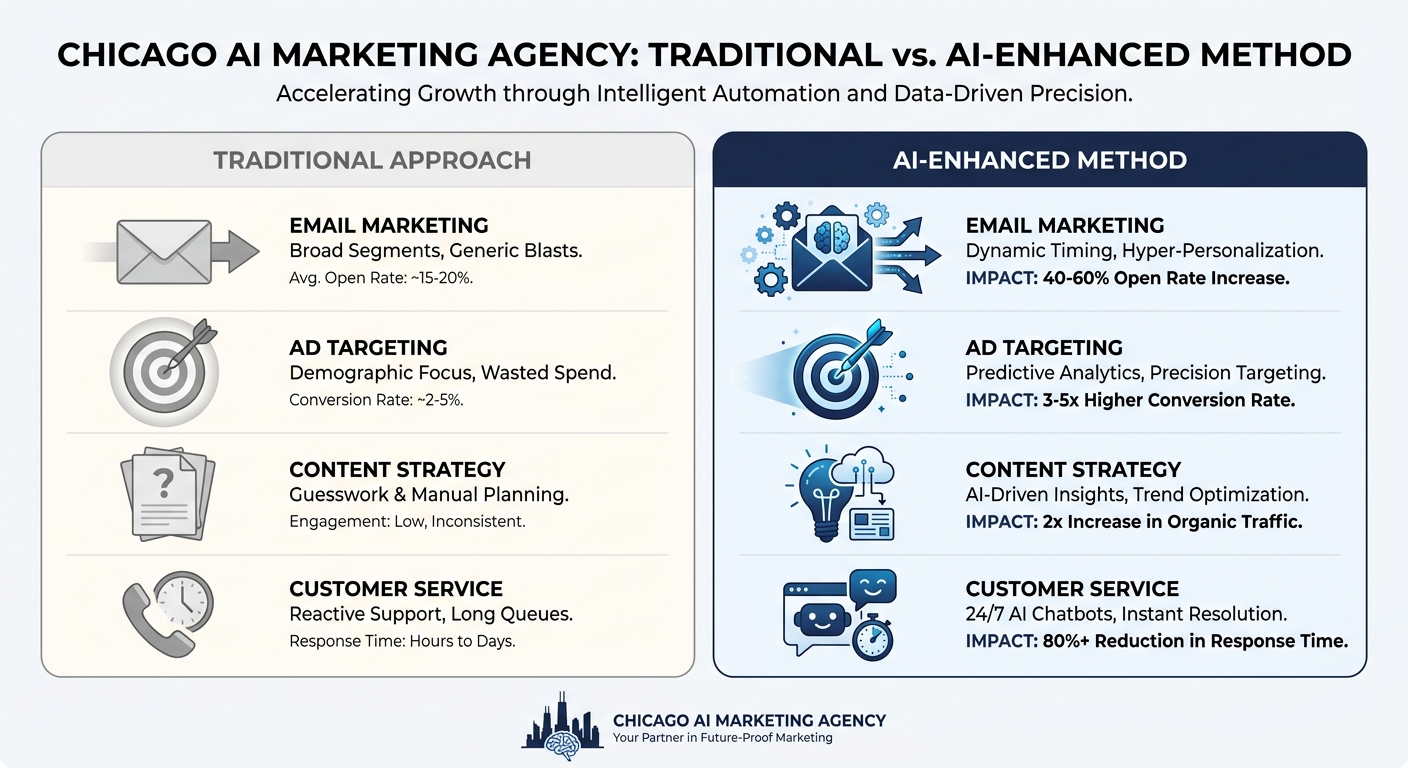
| Service Type | Traditional Approach | AI-Enhanced Method | Typical Impact |
|---|---|---|---|
| Email Marketing | Monthly campaigns, broad segments | Dynamic timing, individual preferences | 40-60% open rate increase |
| Ad Targeting | Demographic assumptions | Behavioral prediction models | 30-50% cost reduction |
| Content Strategy | Editorial calendar planning | Real-time trend analysis | 3x engagement improvement |
| Customer Service | Standard response scripts | AI chatbots with learning | 24/7 availability, 70% automation |
Attribution Modeling That Actually Works
Understanding which marketing efforts drive results has always been frustratingly complex. AI solves multi-touch attribution challenges by analyzing entire customer journeys, assigning appropriate credit to each interaction. A manufacturing company discovered their trade show investments were actually three times more valuable than previously calculated, while certain paid search campaigns were essentially worthless. That information completely redirected their budget allocation.
Choosing Partners Who Understand Chicago
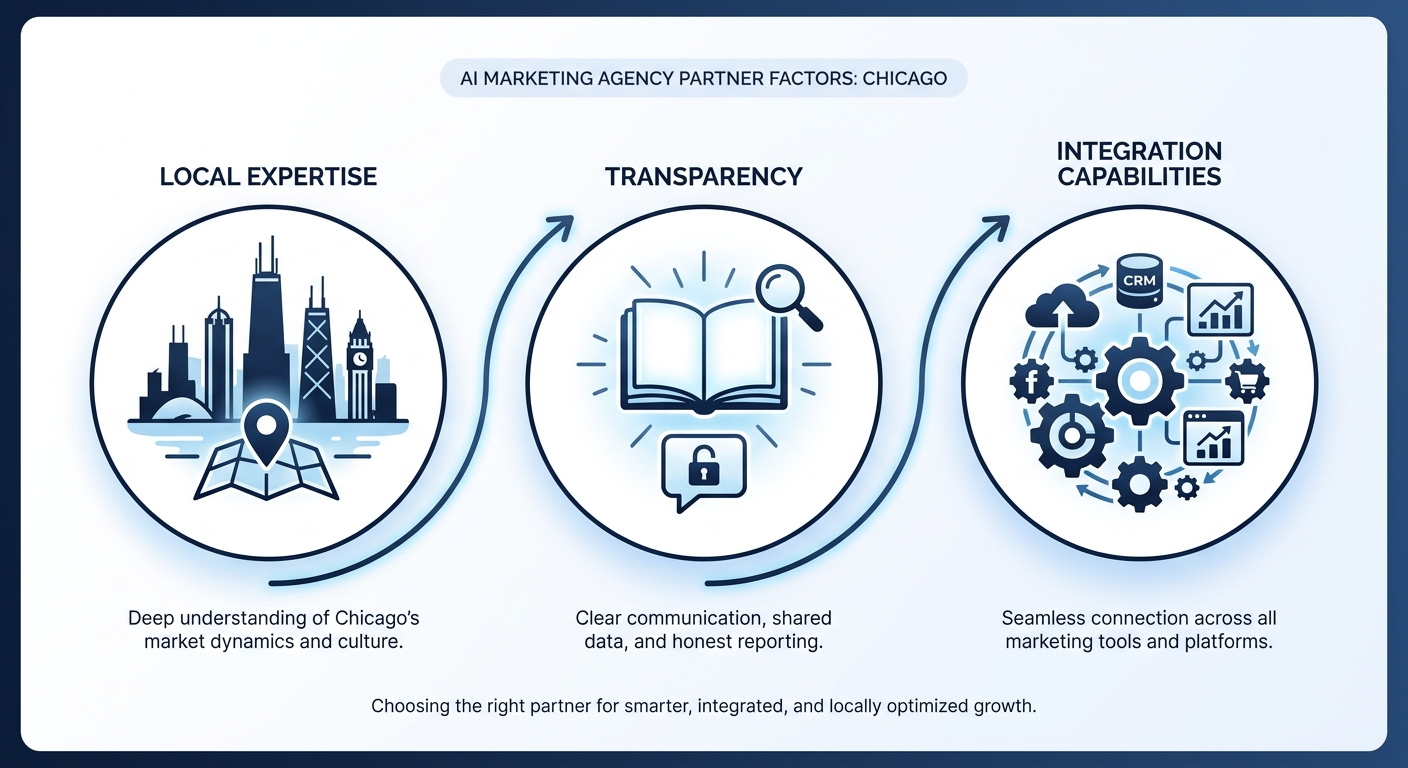
Local expertise matters more than you might think. An AI marketing agency Chicago based understands the specific dynamics of Midwest business culture, regional competition patterns, and local audience behaviors. National agencies often apply generic strategies that overlook crucial local nuances. Chicago businesses typically value straightforward communication, measurable ROI, and practical implementation over trendy buzzwords. These factors should influence how AI strategies are developed and presented.
Transparency separates truly valuable partners from those selling empty promises. The best agencies explain their AI methodologies clearly, share performance data openly, and involve you in strategic decisions rather than treating their processes as mysterious black boxes. You should understand what the technology is doing, why certain recommendations matter, and how results connect to your business objectives. If an agency can’t explain their approach without drowning you in technical jargon, that’s a warning sign.
Integration capabilities determine whether AI marketing actually works within your existing systems. Your ideal agency should connect AI tools with your current CRM, email platform, analytics software, and other marketing technology. Forcing you to abandon working systems or maintain completely separate platforms creates unnecessary complexity and reduces the efficiency gains AI should provide. A River North retail chain nearly abandoned AI marketing entirely because their first agency couldn’t integrate with their established e-commerce platform. Their second partner had everything connected within two weeks.
Track record matters, but context matters more. Any agency can showcase impressive case studies, but you need examples relevant to your industry and business size. How have they helped similar companies in comparable markets? What challenges did they encounter, and how did they adapt? The most valuable agencies admit when certain approaches didn’t work and explain what they learned. Perfect success stories often hide important limitations.
Implementation Without Business Disruption
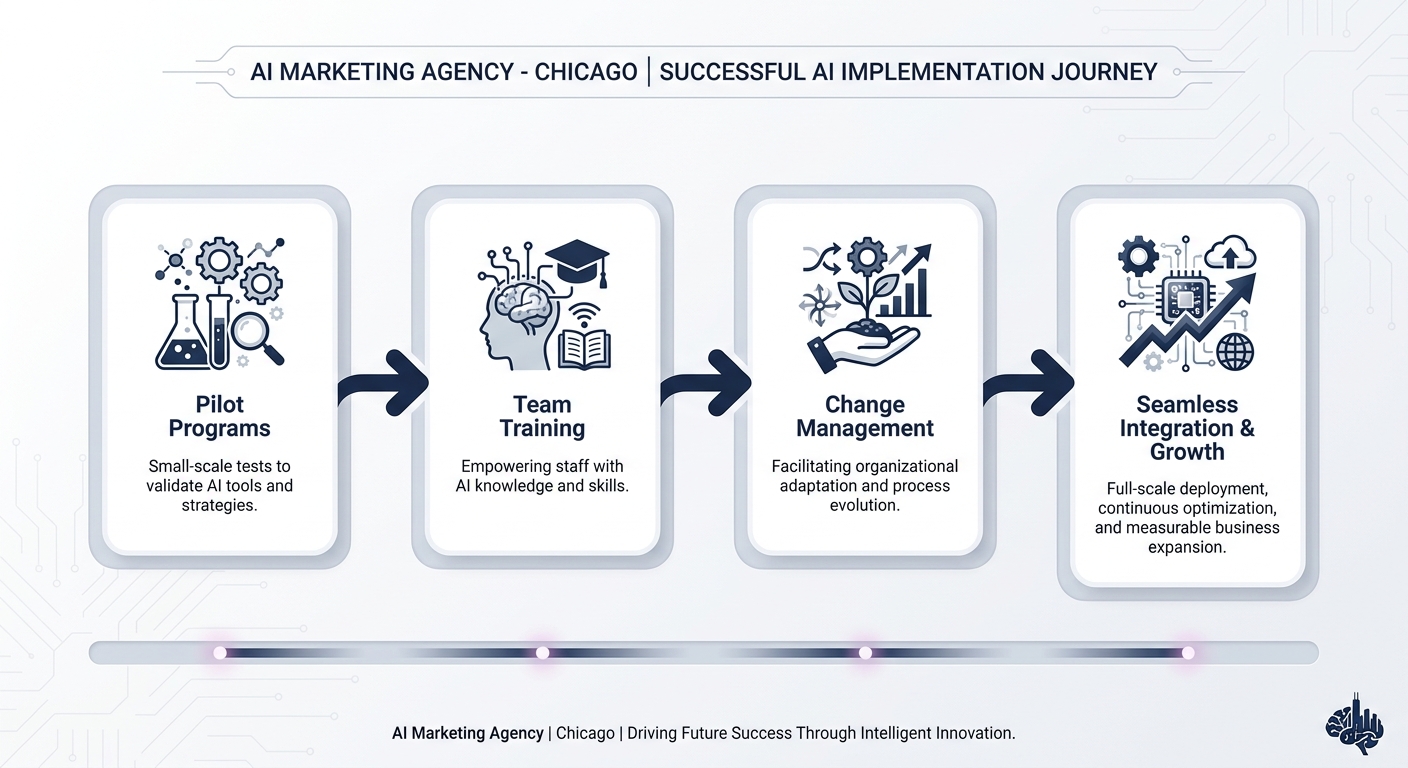
The transition to AI-enhanced marketing shouldn’t feel like ripping out your entire operation and starting from scratch. Effective implementation happens gradually, testing and proving value before expanding. Smart agencies begin with focused pilot programs, maybe optimizing a single email campaign or testing predictive analytics on one product line. These limited rollouts demonstrate capabilities while minimizing risk and allowing your team to adapt comfortably.
Training often gets overlooked but determines long-term success. Your team needs to understand how AI tools work, what the data means, and how to use insights effectively. The technology should empower your existing staff, not replace them or leave them feeling obsolete. A financial services firm in the Loop initially resisted AI marketing because employees felt threatened. Once properly trained and shown how AI handled tedious tasks while freeing them for strategic work, adoption accelerated rapidly.
Change management extends beyond technical training. Organizational culture must embrace data-driven decision making, which sometimes challenges long-held assumptions or established practices. When AI recommendations contradict someone’s gut instinct or traditional approach, having processes for evaluating and acting on that conflict becomes essential. The most successful implementations involve leadership actively supporting the transition and celebrating wins generated by AI insights.
Measuring What Actually Matters
AI generates mountains of data, but focusing on the right metrics prevents analysis paralysis. Revenue impact, customer acquisition costs, lifetime value improvements, and conversion rate changes matter far more than vanity metrics. Your agency should help identify KPIs that align with specific business goals, then track those consistently. A healthcare provider initially got overwhelmed by dozens of AI-generated reports until their agency refined focus to just five critical metrics that directly impacted patient acquisition and retention.
Future-Proofing Your Marketing Strategy
AI technology evolves rapidly, and what works brilliantly today might become baseline expectation tomorrow. The right agency partnership includes ongoing optimization and strategic evolution, not just initial setup. Your marketing approach should continuously improve as AI systems learn from accumulating data and new capabilities emerge. This isn’t about chasing every shiny new tool, but rather thoughtfully integrating proven innovations that enhance results.
Privacy considerations grow increasingly important as data regulations expand and consumer awareness heightens. Ethical AI marketing respects customer privacy while still delivering personalized experiences. Agencies should implement transparent data practices, maintain compliance with evolving regulations, and help you build trust with audiences through responsible technology use. Chicago businesses particularly value this ethical approach. Shortcuts that compromise customer trust ultimately damage brands far more than any short-term gains justify.
Competitive advantage from AI marketing isn’t permanent unless you maintain momentum. As more companies adopt these technologies, baseline expectations shift upward. What separates leaders from followers is continuous refinement and strategic application. Your agency should proactively recommend new approaches, test emerging capabilities, and ensure your marketing sophistication keeps pace with or exceeds competitor efforts. Resting on initial success guarantees eventual obsolescence.
The AI marketing landscape in Chicago continues maturing rapidly, with businesses across industries discovering that intelligent automation isn’t optional anymore. It’s fundamental to competitive success. Whether you’re exploring AI marketing for the first time or looking to enhance existing efforts, choosing partners who combine technological expertise with genuine business understanding makes all the difference. The technology itself matters less than how it’s applied to solve your specific challenges and achieve your particular goals. Chicago’s business environment rewards practical innovation over flashy experimentation, and the best AI marketing agencies reflect exactly that mindset.