SEO Agency Chicago AI: The Smart Way to Rank Higher
Finding the right SEO partner in Chicago isn’t what it used to be. The landscape has shifted dramatically, and AI-powered optimization strategies now separate the agencies that deliver real results from those still stuck in 2015. If you’re searching for an SEO agency in Chicago that actually understands how artificial intelligence reshapes search marketing, you’re probably tired of vague promises and outdated tactics. The truth is, AI isn’t just some buzzword. It’s fundamentally changing how businesses get discovered online, and the agencies worth your investment are the ones already harnessing these capabilities to outmaneuver competitors.
Chicago’s digital marketing scene has always been competitive, but the introduction of AI tools has created a new tier of performance that traditional methods simply can’t match. Whether you’re a Loop-based startup or an established Magnificent Mile retailer, the question isn’t whether you need SEO anymore. It’s whether your agency knows how to use machine learning, predictive analytics, and automated optimization in ways that actually move the needle. Let’s cut through the noise and talk about what actually matters when choosing an AI-driven SEO partner in this city.
Why AI Changes Everything for Chicago Businesses
The integration of artificial intelligence into search engine optimization isn’t a future trend. It’s already here, and it’s reshaping how local businesses compete for visibility. Traditional SEO relied heavily on manual keyword research, guesswork about what might work, and endless hours analyzing spreadsheets. That approach still has merit, but it’s painfully slow compared to what AI can accomplish in minutes.
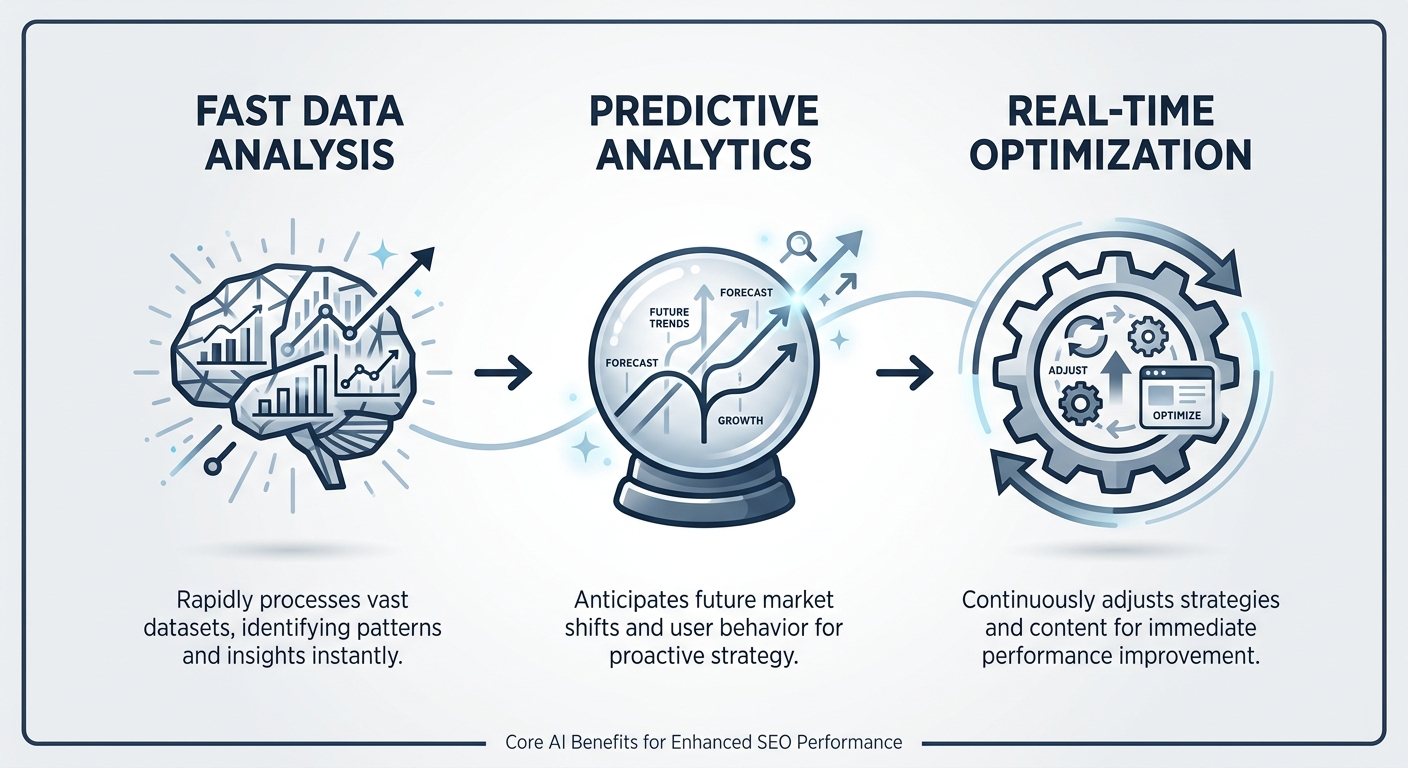
Machine learning algorithms can now analyze thousands of ranking factors simultaneously, identifying patterns that no human could reasonably spot. For a Chicago business competing in saturated markets like legal services, real estate, or hospitality, this means discovering untapped keyword opportunities that competitors haven’t even considered. AI tools can predict which content topics will gain traction before they become oversaturated, giving you a genuine first-mover advantage.
What really sets AI-powered SEO apart is the speed of iteration. Traditional campaigns might test a hypothesis over several months. AI systems can run dozens of micro-tests simultaneously, learning from each interaction and adjusting strategies in real-time. For businesses in neighborhoods like River North or Wicker Park, where local competition is fierce, this agility translates directly into better rankings and more qualified traffic.
The data processing capabilities alone are staggering. AI can monitor competitor movements, track algorithm updates, analyze user behavior patterns, and adjust your optimization strategy accordingly. All while you’re focused on running your actual business. It’s not about replacing human strategy. It’s about amplifying what smart strategists can accomplish when they have the right tools.
The Local Advantage Gets Sharper
Chicago-specific optimization benefits enormously from AI-driven insights. The city’s diverse neighborhoods each have unique search behaviors, seasonal patterns, and competitive dynamics. AI tools can identify micro-trends happening in Lincoln Park that differ completely from what’s happening in Pilsen or Hyde Park. This granular understanding lets agencies craft hyper-targeted strategies that resonate with specific communities rather than generic citywide approaches.
What Actual AI Implementation Looks Like
There’s a lot of hand-waving when agencies talk about AI. Everyone claims to use it, but few explain what that actually means in practice. Real AI implementation in SEO involves specific tools, processes, and capabilities that go far beyond using ChatGPT to write blog posts.
Legitimate AI-powered agencies employ natural language processing to understand search intent at a deeper level. They’re not just matching keywords. They’re analyzing the semantic relationships between concepts, understanding context, and predicting what information searchers actually need. This matters tremendously for businesses trying to rank for competitive terms where Google’s algorithms are increasingly sophisticated about user intent.
Predictive analytics represent another crucial capability. By analyzing historical data and current trends, AI systems can forecast which optimization strategies will yield the best ROI before you invest significant resources. Instead of committing to a six-month content strategy based on intuition, you’re making decisions backed by probabilistic models that account for hundreds of variables.
Automated technical audits have also evolved dramatically. While basic crawlers have existed for years, modern AI-driven audits can prioritize issues based on actual impact rather than just flagging every minor problem. They understand which technical issues genuinely hurt your rankings and which are cosmetic concerns that won’t move the needle. For businesses with complex websites or e-commerce platforms, this prioritization saves enormous amounts of time and budget.
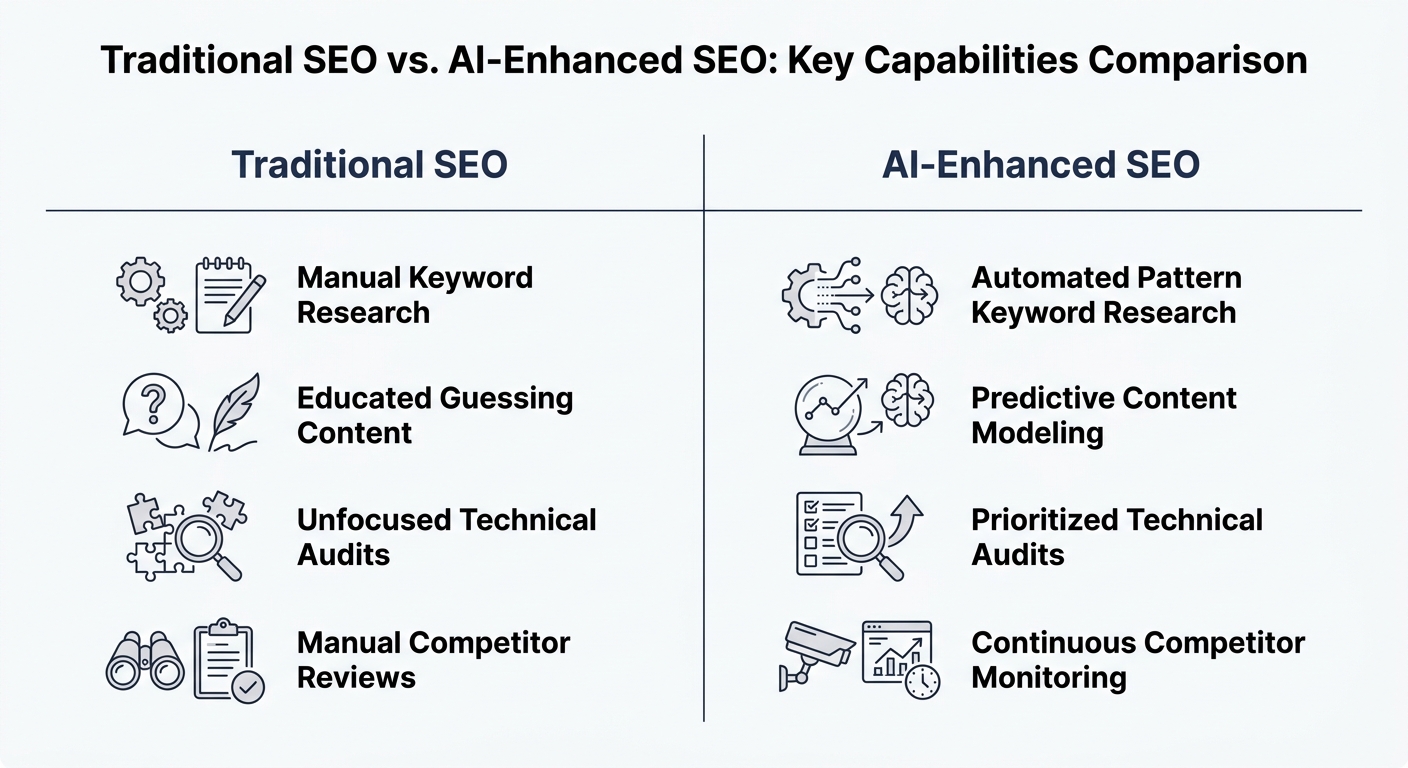
| Capability | Traditional SEO | AI-Enhanced SEO | Impact Level |
|---|---|---|---|
| Keyword Research | Manual analysis, limited scope | Automated pattern recognition across millions of queries | High |
| Content Optimization | Best practices, educated guessing | Predictive modeling, semantic analysis | Very High |
| Technical Audits | Comprehensive but unfocused | Prioritized by actual ranking impact | Medium |
| Competitor Analysis | Quarterly manual reviews | Continuous automated monitoring | High |
The Content Intelligence Factor
Content creation has been revolutionized, though not in the way most people think. The real value isn’t AI writing entire articles. It’s AI informing content strategy with precision that was previously impossible. Advanced systems can analyze top-performing content across your industry, identify gaps in existing coverage, and recommend specific angles that have high ranking potential but low competition. This strategic layer is where AI truly shines, helping agencies guide clients toward content investments that actually pay off.
Choosing the Right Partner in Chicago
The Chicago market has no shortage of SEO agencies, but finding one that genuinely integrates AI rather than just talking about it requires asking the right questions. You want to understand their specific tool stack, how they’ve implemented machine learning into their workflows, and what measurable differences it’s made for similar businesses.
Start by asking about their data infrastructure. Effective AI requires massive amounts of clean, relevant data. Agencies that have built proprietary datasets combining search trends, user behavior, and competitive intelligence can deliver insights that generic tool users simply can’t access. This is particularly valuable in Chicago’s market, where local nuances matter tremendously.
Transparency about limitations is actually a good sign. AI is powerful, but it’s not magic. Agencies that acknowledge what AI can’t do (like understanding your brand voice or making strategic business decisions) are typically more honest about what it can accomplish. The best partners use AI to enhance human expertise, not replace it entirely.
Look for case studies that show specific AI implementations and their results. Generic success stories don’t tell you much. You want to see examples where machine learning uncovered opportunities, where predictive models guided strategy, or where automated systems identified issues before they became major problems. Chicago businesses in competitive sectors should especially scrutinize whether an agency has experience in similar local markets.
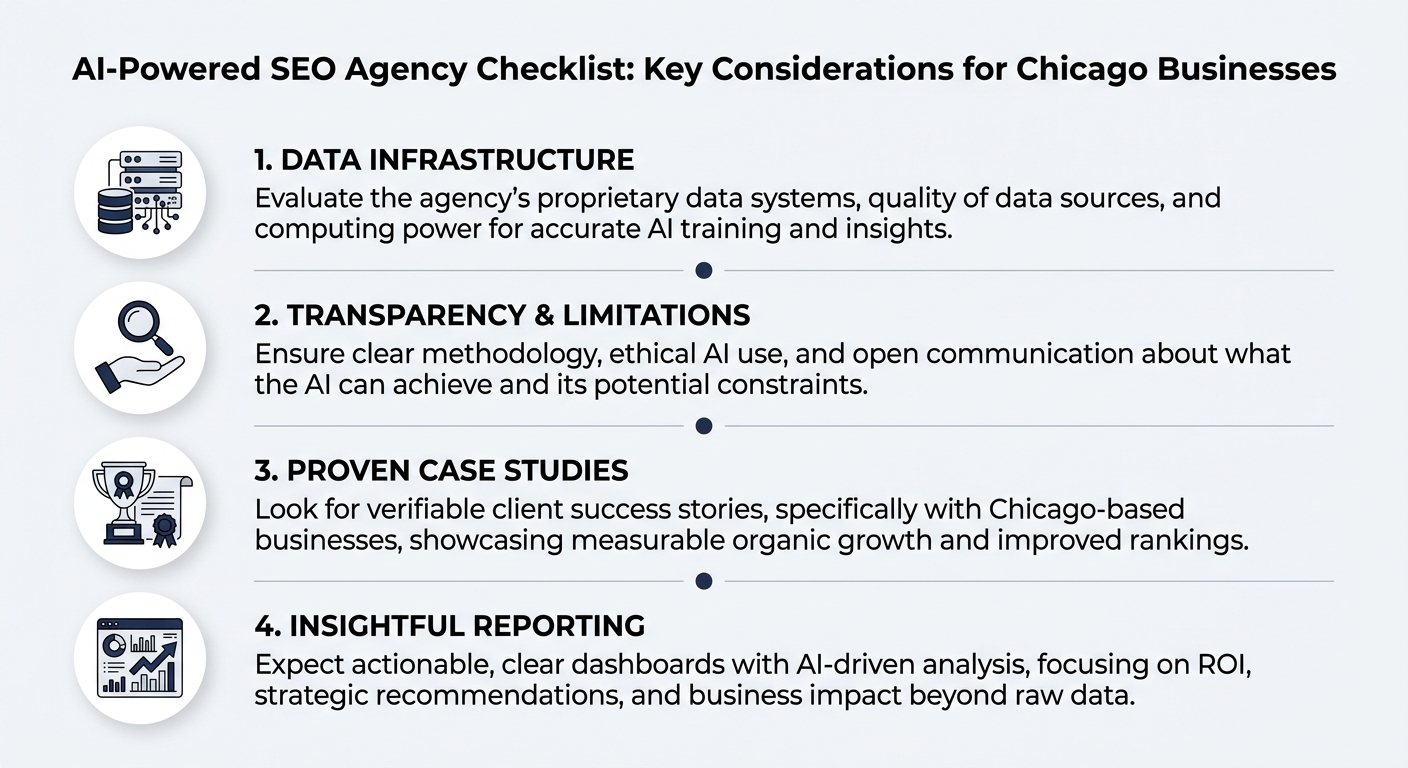
The agency’s approach to reporting matters too. AI capabilities should make reporting more insightful, not just more voluminous. You want partners who can explain what the data means for your business, not just dump dashboards on you. The best AI-driven agencies provide predictive insights. Here’s what we expect to happen next month based on current trends, and here’s why.
The Investment Question Everyone Asks
AI-enhanced SEO services typically cost more than traditional approaches, and understanding why helps you evaluate whether the premium is justified. The technology infrastructure itself represents significant investment. Access to advanced tools, computational resources, and ongoing training for team members who need to stay current with rapidly evolving capabilities.
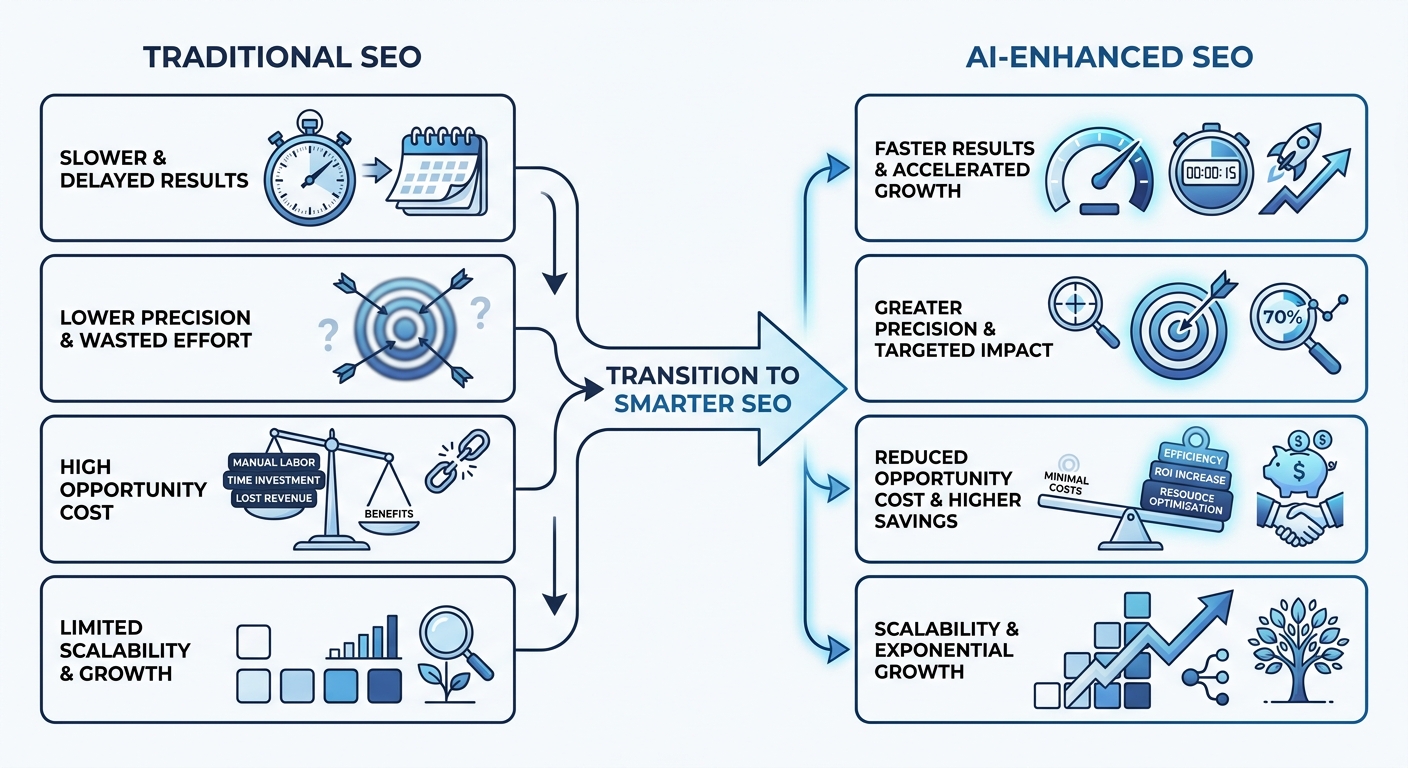
However, the ROI calculation often favors AI-driven strategies because of speed and precision. Campaigns that might take twelve months using traditional methods can sometimes achieve similar results in six to eight months with AI optimization. The reduced time to results often offsets the higher monthly fees, especially for businesses in competitive Chicago markets where delayed visibility means lost revenue.
Consider also the opportunity cost. While one agency slowly builds your presence using manual research and guesswork, an AI-powered competitor might be dominating search results and capturing market share. In fast-moving industries like tech, professional services, or e-commerce, that delay can be devastating. The question isn’t just what you’re paying, but what you’re potentially losing by moving too slowly.
Scalability is another factor that impacts long-term value. AI systems improve with more data, meaning your optimization should become more effective over time rather than plateauing. Traditional campaigns often hit diminishing returns after the low-hanging fruit is captured, while AI-driven approaches continue finding new opportunities as they accumulate more performance data.
What Success Actually Looks Like
Understanding realistic expectations prevents disappointment and helps you evaluate whether your agency is delivering. AI doesn’t mean overnight rankings or magical traffic spikes. It means more efficient progress toward sustainable visibility that compounds over time.
Early wins typically come from AI’s ability to identify quick optimization opportunities that manual analysis might miss. This could be technical fixes that immediately improve crawlability, or content gaps where you can rank quickly because competitors haven’t addressed specific search queries. These early results build momentum and validate the strategic direction.
Medium-term success shows up as improved rankings for competitive terms, increased organic traffic from high-intent searchers, and better conversion rates as AI-optimized content better matches user intent. For Chicago businesses, you should also see improved local pack rankings and more visibility for neighborhood-specific searches relevant to your locations.
Long-term outcomes include sustained top rankings even as competitors try to catch up, a content ecosystem that continues attracting traffic without constant intervention, and the ability to quickly capitalize on new opportunities as markets shift. The compounding effect of AI optimization means your visibility should accelerate rather than plateau, assuming the foundational strategy remains sound.
The most sophisticated agencies also provide predictive metrics. Forecasts of where your rankings will be in three or six months based on current trajectory and planned initiatives. While not perfectly accurate, these predictions help with business planning and budget allocation in ways that traditional reporting never could.

About the Author: Written by digital marketing specialists with extensive experience helping Chicago businesses navigate the evolving SEO landscape. Our team combines technical expertise with practical knowledge of what actually works in competitive local markets, focusing on strategies that deliver measurable results rather than empty promises.